Aisem: "There's a risk of production shutdowns for some companies. It's necessary to ensure more adequate time and effective training support tools."
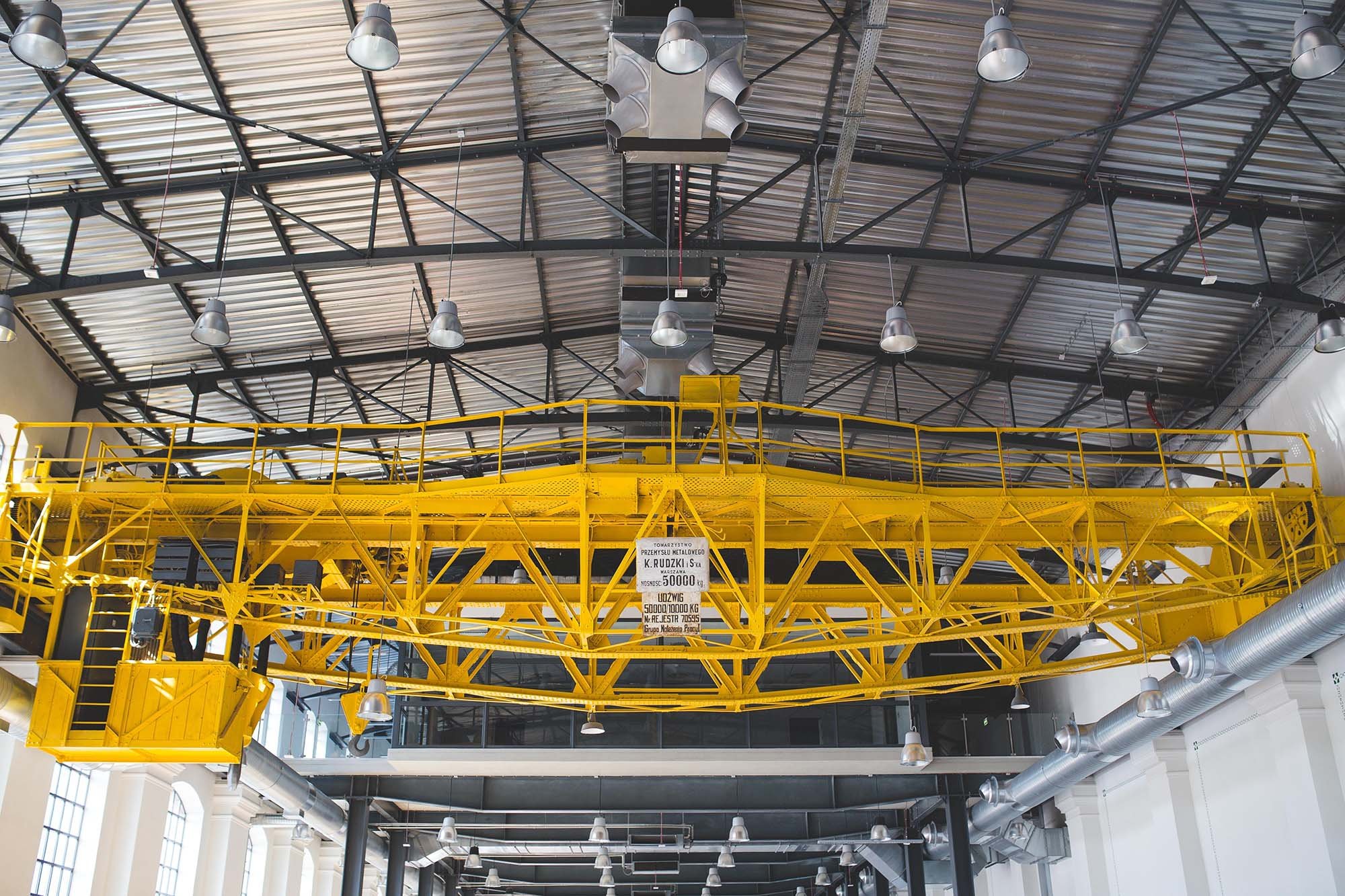
Starting May 19, overhead crane operators in Italy, a professional category employing over half a million people, will also be required to be trained in accordance with the 2025 State-Regions Agreement (ASR 2025). Without this training, required by specific regulations, it will be impossible to practice the profession. Incidentally, the Ministry of Labor lists the May 19 date on its website, although based on the publication date of the ASR 2025 in the Official Journal, compliance effectively begins on May 25. This discrepancy in dates is creating uncertainty among operators regarding safety, an issue on which uncertain interpretations should not exist.
Before the introduction of the new Agreement, training on the use of equipment such as overhead cranes was already required by the Consolidated Law on Occupational Safety (Legislative Decree no. 81/2008), but the choice of training program remained at the discretion of the employer . With the new Agreement, however, overhead cranes have been included in the list of work equipment for which specific, standardized, and predefined training is mandatory—both in content and in terms of hours—as is already the case, for example, for forklifts.
However, significant critical issues have emerged in the practical implementation of ASR 2025. The timeframe allowed for compliance has proven too short given the vast number of companies involved. According to estimates by AISEM , the Italian Association of Lifting, Elevation, and Handling Systems affiliated with Anima Confindustria, over 150,000 overhead cranes are currently in operation in Italy, each operated and managed by different operators within the company.
This creates a difficult-to-manage paradox: by law, all overhead cranes used by operators without adequate training, i.e., in line with the provisions of the ASR 2025, must be stopped, with serious operational repercussions for many companies.
AISEM President Massimiliano Bariola comments: "The introduction of mandatory licensing for overhead crane operators raises regulatory and institutional controversies. The distinction between the previously required training and the current mandatory requirement, with standards set by interinstitutional agreements, creates uncertainty and difficulties of interpretation for businesses. It should also be considered that some companies may not yet be aware of this new requirement, given the short timeframe between the announcement of the requirement and the entry into force of the regulation. Given the large number of operators involved ," Bariola continues, " AISEM had asked the institutions for at least five years to complete the training courses, but this request was not granted. It is therefore necessary for the competent authorities to collaborate to ensure more adequate time and effective training support tools, in order to reconcile safety and production continuity."
Matteo Frigo , lifting group leader within Aisem, emphasizes: "The operational difficulties in implementing mandatory training are evident and shared by the operators themselves. There is also a real risk of short-lived or poorly structured training courses being organized, which do not follow the correct required training path . We remind you that Aisem and its member companies are accredited training organizations , in full compliance with the provisions of the State-Regions agreement. At this time, open dialogue between regulatory bodies, companies, and trade associations is needed to prevent a measure designed to protect safety from becoming an obstacle to regular work activities. Aisem will continue to carefully monitor the evolution of the situation, confirming its commitment to complying with safety regulations and industrial development needs."
AISEM is the Anima federated association that brings together the best national businesses for the construction and distribution of material handling, lifting, and hoisting machinery. It represents over 80% of the entire national production, approximately 40% of which is exported.
ANIMA Confindustria is the trade organization within Confindustria that represents companies in the mechanical and related sectors, a sector that employs 224,000 people, generates a turnover of €59.1 billion, and will account for approximately 60% of exports in 2025 (Anima Research Office 2025 forecasts). The macro-sectors represented by ANIMA are: construction and infrastructure; material handling and logistics; food production; energy production; industrial production; and safety and environment.
Steel exports: the top ten hubs are worth €6.9 billion.
In the first half of 2026, exports from the main steel districts grew by 1.9%. Imports decreased by 9.2%. The Italian steel industry is holding up on foreign markets, but at very different rates across regions. In the first half of 2026, exports in value of steel products, pipes and other products from the first transformation of steel from the top ten Italian steel hubs reached almost 6.9 billion euros , compared to 6.7 billion in the same period of 2025, marking a growth of 1.9% . The data for the top ten hubs is more dynamic than the overall export trend: overall, they fell by 0.1% in value in the half-year, compared to a 0.2% increase in volume . This slight decrease, explains the siderweb Research Office, is due to lower sales prices. The rankings confirm Brescia at the top. Udine maintains second place, and Cremona third. However, the rankings show significant changes: Milan gains two spots, Reggio Emilia gains one, while Bergamo loses two and Lecco loses one . Brescia strengthens its leadership. Milan climbs. The Brescia hub remains Italy's leading steel hub in terms of export value, recording growth of 7.1% . This increase allows Brescia to widen its lead over Udine: the gap between the top two hubs increases from 74.7 to 96.5 million euros . Udine maintains second place with a 5.3% increase in exports. However, Cremona recorded the strongest growth among the top ten hubs, consolidating its third place: +12.6%. Mantua , fourth in the ranking, saw a 5.8% drop in exports. Milan saw significant growth, rising two places with a 4.5% increase. Vicenza retained its sixth position, with export values essentially unchanged compared to the first half of 2025. The most negative figure in the ranking is that of Bergamo , which recorded a 19.5% contraction in exports and dropped two positions. On the other hand, Reggio Emilia recorded one of the most significant increases, with an 11.1% increase, and rose one position. Terni grew by 7.8% and maintained its eighth place. Lecco rounded out the top 10, with exports down 3%. Taranto , home to the Acciaierie d'Italia steelmaking hub, is also outside the top 20 in the first half of 2026. Exports fell by 86.5%. In 2025, the value had fallen by 40.3% compared to the previous year, stopping at 42 million euros (362 million in 2022). Imports: €500 million less from the top ten hubs The picture is changing for foreign purchases. In the first half of 2026, imports from the top ten steel hubs decreased by 9.2%, from 5.8 to 5.3 billion euros : approximately 500 million euros less in a year. At the national level, the contraction is even more marked: imports of steel products, pipes, and other products from the first steel transformation decreased by 13% in value and 15.9% in quantity. The different dynamics between European and non-EU suppliers is particularly significant. Imports from non-EU countries decreased by 22.5%, equal to approximately 1.6 million tonnes, while those from EU countries decreased by 2.1%. In the context outlined by the analysis by the siderweb Research Office, the reduction in non-EU purchases is also linked to the full implementation of the Carbon Border Adjustment Mechanism (CBAM) .
 Industriale.it certification