Renishaw: smooth, flawless surfaces

Published the 03/10/2025
Renishaw: smooth, flawless surfaces

In automotive manufacturing, precision isn't just important—it's everything. From the smallest details of a manufactured component to the overall safety and performance of a vehicle, the quality of the tools used in production can determine the outcome of the entire process. As the automotive industry moves towards more complex and lightweight designs, the need for cutting-edge technologies to ensure the perfection of every mold has never been greater, explains Jamie Buckingham, Director and General Manager of Machine Tool Products at Renishaw.

Advancing automotive industry standards

In mold design and manufacturing, precision is critical to ensuring the safety and performance of automotive components. The surface quality of a stamping tool, for example, is essential for producing vehicle components that meet the precise standards required by the industry. It can directly impact the functionality, quality, proper ejection from the mold, wear resistance, and surface aesthetics of the stamped component. Today, it is essential to produce these molds for the automotive industry using advanced technologies.

For more than 50 years, we at Renishaw have worked closely with our industry customers to solve key manufacturing challenges. We are renowned for designing, developing, and supplying process control and precision measurement solutions for manufacturing companies. Our range of non-contact tool gauges, for example, delivers industry-leading performance for tool measurement and broken tool detection.

Improving tool-to-tool accuracy

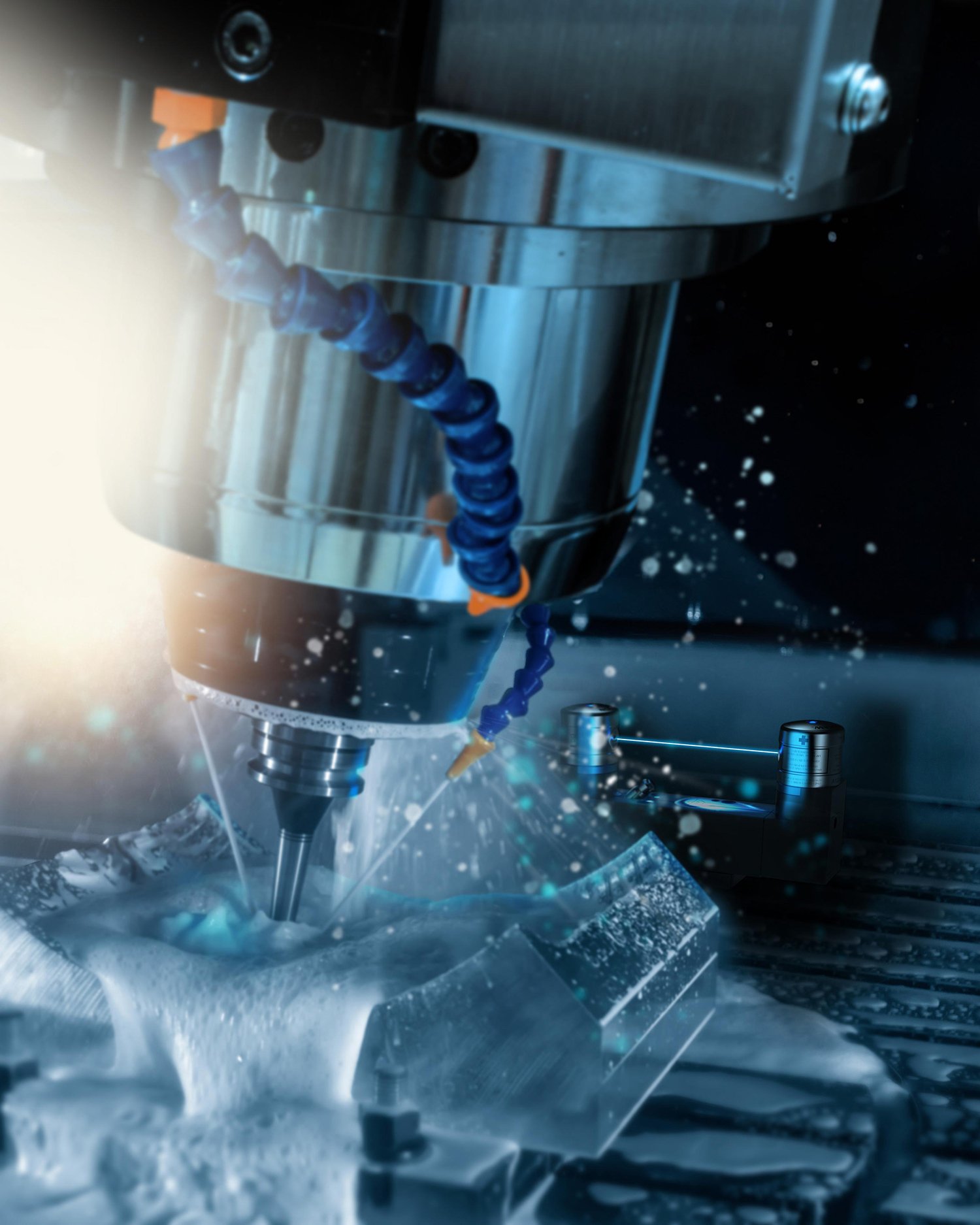
Automotive stamping processes can be complex, with multi-part parts and free-form surfaces. For stamping and painting applications, where multiple types of cutting tools are used to machine the surface of a single workpiece, it is essential that the transition from one tool to the next is absolutely precise. When switching between cutting tools, the length of these tools must be set with the utmost precision to avoid creating "steps" on the mold surface. Such an imperfection would then be reproduced on every component made from the defective mold, potentially compromising its performance.

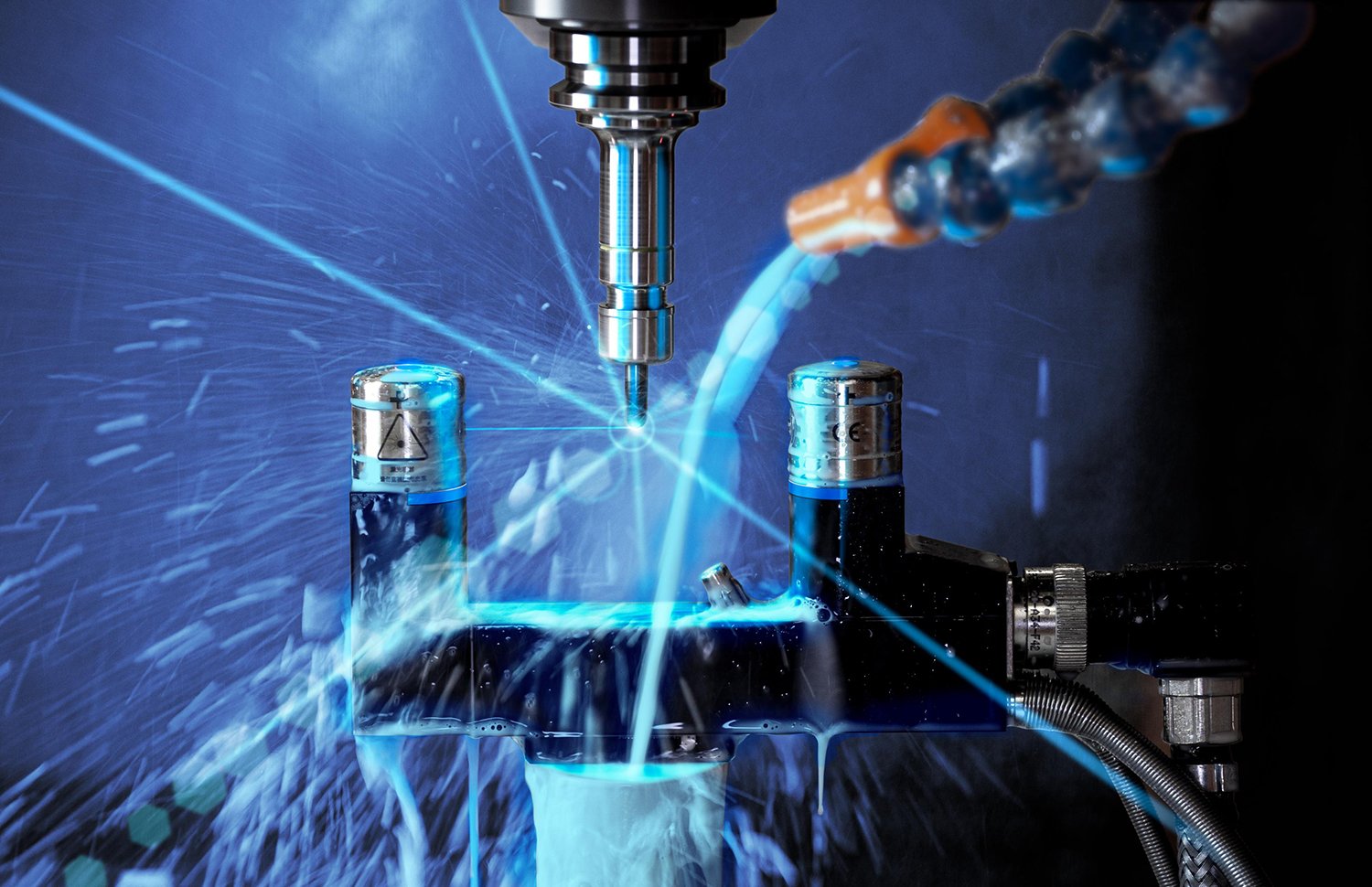
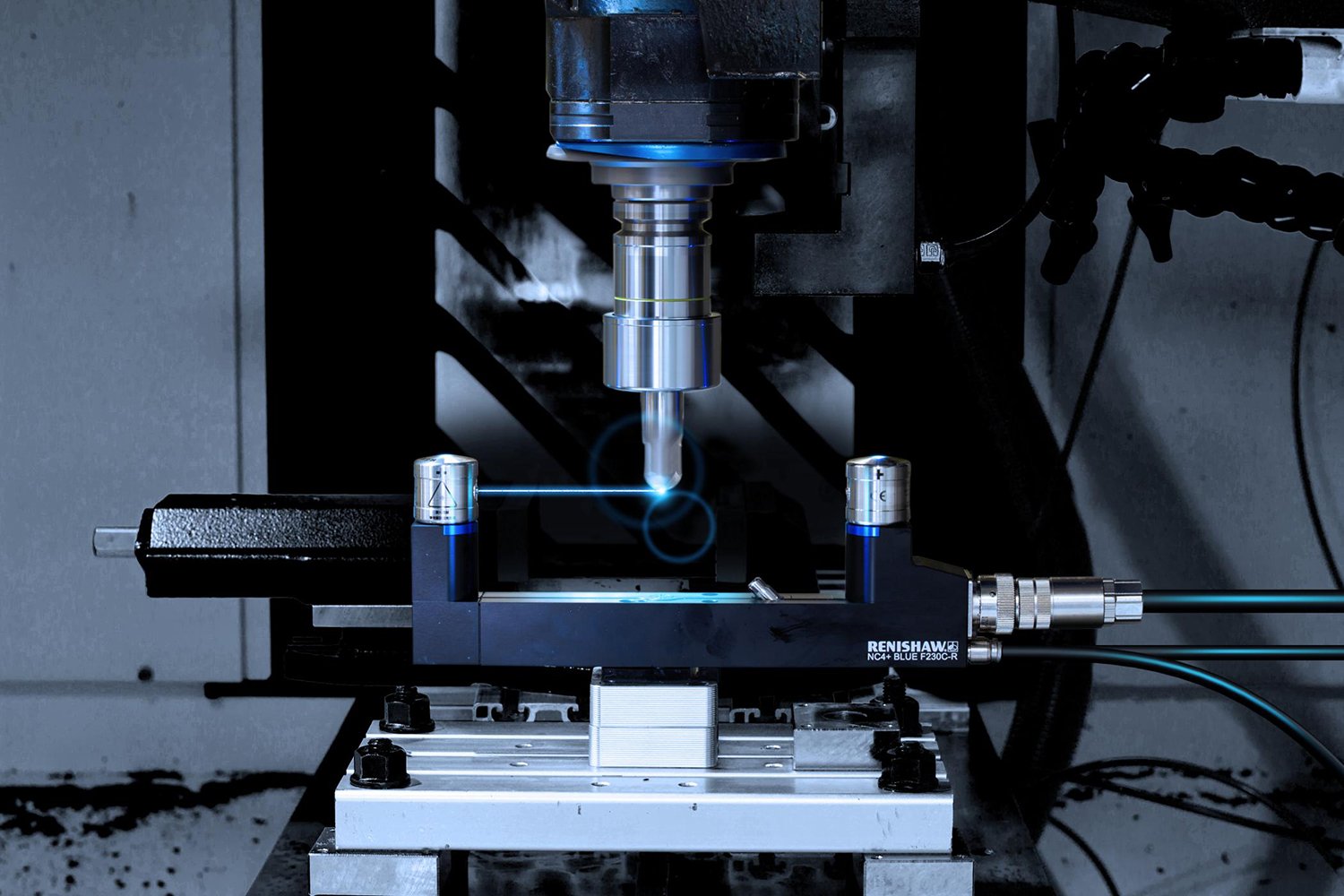
In CNC machining, cutting tool length errors can cause imperfections that result in machining features falling outside the required tolerances. Advanced tool setting systems can prevent these problems. For example, Renishaw's NC4+ Blue system features high-precision blue laser technology that provides reliable, non-contact measurement of cutting tools.

To further ensure consistent results, it also offers a built-in “air blast” for the quick and efficient removal of coolant and cutting debris from the cutting tool before measurement. To determine the cross-tool accuracy of length measurements made with our NC4+ Blue system, we use a dedicated cutting test based on an ISO standard (ISO 230-10 8.2.8.1.3). In a test conducted with a Makino D200Z 5-axis CNC machine tool, the NC4+ Blue measuring system was found to be accurate to within an incredibly small 2 microns.

Finding Tool Defects

Machining with a chipped cutting tool is another scenario that could negatively impact the surface quality of a molding tool. A surface finish with imperfections can affect the ease with which a component is removed from its mold. Components made of silicone or nylon, for example, may stick. Poor surface quality can also impede the flow of material within the mold, potentially requiring additional finishing and increasing the overall time required to produce the affected part.

The cutting tool defect may be just a few tens of microns in size, but it would still result in noticeable imperfections on a workpiece surface. Our NC4+ Blue system can measure tool length and diameter non-contactly and check for damaged cutting tools. It can measure very small parts to ensure excellent tool-to-tool accuracy, and it has a small footprint when inserted into the machine, so it takes up little space on its base.

Furthermore, the NC4+ Blue system offers an impressive suite of software cycles that can be used to detect even the smallest defects in cutting tools. This allows manufacturers to ensure high-quality surface finishes on their molds. These easy-to-use software cycles provide an intuitive way to measure a wide range of cutting tool imperfections that, if left unresolved, could result in poor surface finishes. The NC4+ Blue tool measurement system can perform high-speed checks to determine whether cutting tools are damaged or broken, and whether they have burrs or missing inserts. It can also examine the edge of cutting tools to detect chips as small as 30 microns in flutes. Additionally, the system can measure cutting tools made from a wide range of different materials and those that use internal coolant. At Renishaw, we understand that when it comes to automotive excellence, every micron counts. With over 50 years of experience, we guarantee the precision and reliability of every cutting tool and enable the automotive industry to achieve innovation, efficiency, and safety – one precise measurement at a time.
For more information: Renishaw
Renishaw: smooth, flawless surfaces

Other articles that may interest you

Duratomic® technology raises the bar in steel turning

Seco® introduces TP3502, a new CVD-coated Duratomic® turning insert that represents a breakthrough in insert design for ISO P steel applications. Thanks to continuous improvements in manufacturing methods, TP3502 establishes itself as the new benchmark in performance. The result is exceptionally stable and predictable tool life, even under interrupted cutting and varied machining conditions. A new benchmark for steel turning TP3502 was developed for steel machining applications involving varying material hardness, complex component shapes, and interrupted cuts. Positioned as a versatile ISO P insert, it balances wear resistance and toughness in a wide range of applications. Rated in the ISO P35 range, TP3502 is designed to compete with CVD inserts in steel turning. The insert features an updated coating and cutting edge preparation designed to produce a more controlled wear progression and longer insert life than previous generations. The goal is to enable higher cutting speeds while maintaining process stability and consistent part quality. Designed for interrupted or variable cutting conditions TP3502 is an insert for turning steels, from low-alloy steels and stainless steels to ductile irons and powder metallurgy materials. These applications often involve interruptions and variable cutting conditions, requiring both toughness and reliable performance. "With TP3502, the focus is on improving process reliability in steel turning," says Mikael Lindholm, Global Product Manager General ISO Turning at Seco. " This stability allows manufacturers to increase cutting data and simplify production planning ." The insert also incorporates features to support digitalization and sustainability initiatives. Chrome edge detection is designed to help operators maximize the use of each cutting edge, while a Data Matrix code enables digital traceability and monitoring. The TP3502 is manufactured using recycled powder and is included in the recycle-buy-back program, supporting waste reduction and sustainability reporting.

14/10/2026 Read more

Gefran's advanced automation redefines bausano's ai-driven extrusion

In the plastics processing sector, the growing adoption of digital and intelligent solutions is redefining the ways in which extrusion processes are controlled and optimized. In this context, the collaboration between Gefran and Bausano is consolidated: a synergy that integrates advanced automation and industrial AI , with Gefran enabling the intelligent line architecture, while Bausano integrates it vertically into the extrusion process. The result is a new generation of Bausano systems, further enhanced by Gefran technology, which guarantees greater operational simplicity and an even more intuitive user experience. AI-DRIVEN EXTRUSION: WHEN DATA BECOMES OPERATIONAL VALUE The ability to collect, analyze, and interpret data in real time, through distributed intelligence throughout the entire process, transforms plant-generated data into immediately actionable insights that can concretely support operators in their daily decisions. The result is more stable, efficient, and responsive production, where data becomes an active element for enhancing performance: AI transforms process KPIs into concrete and timely actions , helping prevent anomalies to ensure a continuous and efficient production flow. G-MATION P6: AT THE HEART OF DISTRIBUTED INTELLIGENCE To meet these challenges, Gefran introduces G-Mation, an open, modular, and scalable automation platform that integrates process control, Industrial IoT, and generative artificial intelligence. A key element is the G-Mation P6 PLC , an in-panel device that combines the functionality of a process controller with that of an edge device. The PLC guarantees cycle times of up to 250 µs, supports multiple EtherCAT network topologies , and integrates a web server that offers multiple visualization options. It also implements the MQTT, OPC UA, and Euromap communication standards and supports VPN agent installation to ensure secure network connections without the need for external gateways. Furthermore, the Docker architecture allows new applications to be added in the form of apps, without impacting machine control performance. The G-Mation P6 PLC architecture was designed to comply with the requirements of new cybersecurity regulations , integrating control, visualization management, apps, and cloud connectivity within the same device. This way, the number of interfaces exposed to cyber attacks is reduced and the effort required for machine certification is significantly reduced. SKILLS AND DATA: THE OPERATIONAL BENEFITS OF AI IN EXTRUSION It is precisely on this innovative Gefran architecture that Bausano has built a new paradigm for AI-driven plastics extrusion. In a market where specialized operators are increasingly difficult to find, the challenge, beyond automation, lies in transferring skills and decision-making capabilities directly into process control . The integration of machine learning algorithms within the line allows for real-time analysis of operational data, preventing anomalies, and dynamically optimizing process parameters. Every second, an extrusion line generates thousands of data points that AI converts into measurable values, facilitating operator onboarding , structurally reducing machine downtime, and ensuring greater stability, safety, and overall line performance. SPHERA: THE AI ECOSYSTEM THAT TURNED DATA INTO ACTION This is the context in which SPHERA takes shape, an AI ecosystem directly integrated into the extrusion line designed to operate within a single, coordinated suite. At the heart of the platform is PHAROS, an analytics engine that enables real-time monitoring of dynamic KPIs and OEE , predictive diagnostics, and historical data analysis to prevent anomalies and keep the extruder in optimal operating conditions. Operating alongside PHAROS is RANGER , the result of a combination of Generative and Agentic AI models . It is now able to autonomously read the data generated by PHAROS and intervene in advance to prevent deviations and optimize performance. Trained and customized specifically for the customer's specific needs , it directly supports the operator in making critical adjustments, with contextual and data-driven suggestions. "The introduction of artificial intelligence into companies is now an increasingly strategic competitive factor. According to Eurostat, by 2025, nearly 20% of European companies with at least 10 employees will use AI-based technologies, a figure that exceeds 55% among large companies," comments Renzo Privitera, Sales Director at Gefran, who concludes , "True progress in extrusion comes from the integration of mechanics, data, and digital intelligence. It is precisely companies' ability to manage complexity and simplify it that will determine their competitiveness in the market." Massimiliano Fenili, Technical Manager at Bausano, states: “When technological infrastructure and process expertise converge, extrusion evolves into a truly intelligent system capable of dynamically adapting to production variables,” concluding, “Once again, this is the value of the collaboration between Bausano and Gefran: jointly developing a cutting-edge solution, specifically for extrusion, already operational in the field with concrete and measurable results.”

14/10/2026 Read more

Sandvik coromant returns to bi-mu 2026 with an entirely digital booth.

Sandvik Coromant, a world leader in metalworking and manufacturing solutions, will return to BI-MU 2026 from October 13 to 16, 2026, at Fiera Milano. The company's participation strengthens its position as a technology partner in the transition to connected, data-driven manufacturing. BI-MU 2026 is an international trade fair dedicated to the machine tool sector, bringing together professionals and decision-makers from across the manufacturing sector. The event serves as a key meeting point for presenting innovations in industrial manufacturing and advanced production technologies. As part of its renewed presence, Sandvik Coromant will be exhibiting in Hall 22, among the machine tool manufacturers, with a completely redesigned booth concept (Stand E10). The company will present a fully digital booth designed as an immersive experience, going beyond the traditional product display to focus on integrated solutions, software, data, and value-added services. The booth was designed as an interactive environment where visitors can interact through digital demonstrations, interactive screens, and displayed application examples. Rather than a conventional exhibition space, it will function as a technical consultation area designed to foster discussion, simulation, and a deeper understanding of manufacturing challenges and solutions. Through this approach, Sandvik Coromant aims to make digital and software-based manufacturing solutions more tangible and accessible, helping visitors explore how integrated technologies can improve performance and process control. A key focus will be CoroPlus® digital machining solutions, which will highlight how data-driven capabilities can support process optimization, improved tool and software integration, and greater control of manufacturing operations. The company will demonstrate how this approach enables manufacturers to improve productivity, operational efficiency, and process predictability. This evolution reflects Sandvik Coromant’s broader transformation from a tool supplier to a technology partner in connected manufacturing, supporting the development of digital and flexible manufacturing environments based on data, performance and process control. Additionally, Sandvik Coromant will participate in the BI-MU FutureTech competition, the official initiative that recognizes innovative solutions presented at the fair. This participation underscores the company's commitment to technological innovation, digitalization, and sustainability, and strengthens its position in the development of next-generation manufacturing. "BI-MU is an important opportunity for us to showcase our ongoing transformation and our focus on digital manufacturing solutions," said Antonio Principe, Sales Cluster Manager at Sandvik Coromant. "Our booth concept reflects our evolution from tool supplier to technology partner, helping customers connect data, processes, and performance." Visitors are invited to visit the Sandvik Coromant stand in Hall 22 to meet with experts and learn how connected and digital manufacturing solutions can support the transition to more efficient, data-driven production systems. Sandvik Coromant Together with our customers and partners, Sandvik Coromant is paving the way for a sustainable future, providing tooling solutions to mechanical industries worldwide. Over eighty years of field experience have allowed us to acquire a wealth of knowledge in the field of metalworking. This expertise transforms every challenge into an opportunity for innovation, collaboration, and cutting-edge solutions. Our goal is to create positive change by promoting sustainability, efficiency, and growth to shape a future where innovation thrives. Part of the global Sandvik industrial group, Sandvik Coromant is shaping the future together. For more information, visit www.sandvik.coromant.com or join the conversation on social media.

16/09/2026 Read more
Subscribe to our newsletter
To stay updated on the latest news of the industrial world
Contact us
Image Newsletter Lindustriale
Dati Legali

L'industriale s.r.l.
P. IVA: 12212870153
Codice Fiscale: 12212870153

Sede Legale

Via Carlo Dolci, 32
20148 Milano (MI)
Italy

Registro Imprese

Iscrizione R.I.: 12212870153
REA: MI-1539011
Capitale sociale: Euro 10.400,00 i.v.

Top
This website is protected by reCAPTCHA, therefore the Google privacy policy and terms of service apply.